Safe, secure and reliable energy
Committed to Safety
The LNG industry places safety at the heart of its priorities and operations and is continuously working further to improve the security of people, production, storage, and transport.
Advancing technology, innovative equipment designs and improved processes provide multiple layers of protection, such as:
- Primary containment
- Secondary containment
- Comprehensive personnel training
- Safeguard systems
These elements, when integrated with industry standards, regulatory compliance and Best Management Practices (BMPs), form the foundation of strong safety and security performance.
LNG Shipping
The LNG shipping industry employs a safety-first culture. Since the very first shipments of LNG in 1959, more than 75,000 cargoes have been safely delivered all around the world.
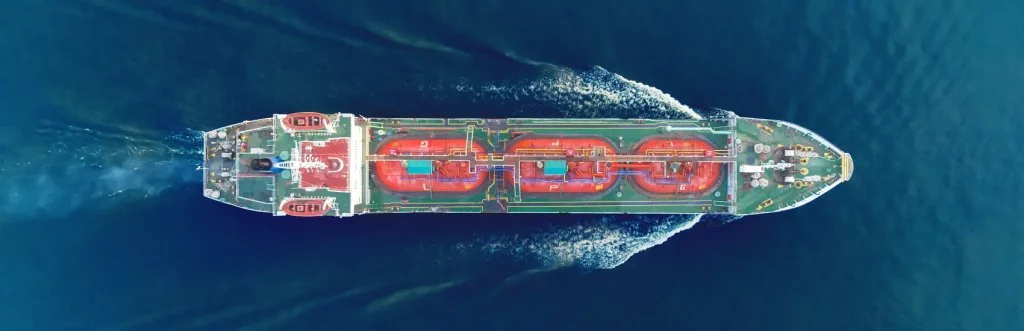
Much of this safety performance and reliability can be attributed to strict standards for vessel design and construction along with state-of-the-art equipment. There are two primary types of non-pressurized containment designs used on LNG ships – geometric membrane and Moss-type spherical. With a gap of at least two meters between the outer vessel hull and cargo containment tanks, the LNG cargo is well protected for long-distance transport to market.
Another safety characteristic inherent to the vessel design is numerous safeguard systems, including gas, heat and fire detection and suppression systems. In addition, LNG carriers are always maintained in class.
Carrier security is enhanced through full compliance with the International Ship and Port-Facility Security (ISPS) Code and established safety exclusion zones.
LNG Operations & Personnel
Operators of LNG production facilities are required to adhere to strict international standards that provide criteria for siting, layout, design, fabrication, construction, and operations.
Personnel at LNG production facilities are trained in safety procedures, equipment inspections, and security, and well-versed in contingency plans and emergency response. Comprehensive safety and emergency-response drills are conducted on a regular basis to evaluate and enhance response capabilities.
For LNG facilities, site security is a high priority and includes controlled access, continuous monitoring, and dedicated and highly trained security personnel.